

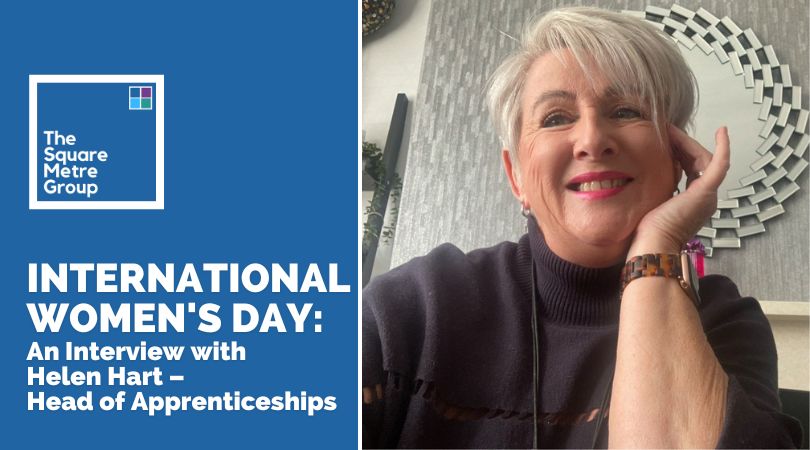
For International Women’s Day, we’re privileged to feature Helen Hart, Head of Apprenticeships at The Square Metre Group, specialising in security professionals and crowd safety. Helen shares her insights on the challenges and triumphs of being a woman in a traditionally male-dominated industry. She discusses the gender stereotypes she’s encountered, the strategies she’s employed to overcome them, and her proudest achievements in shaping the future of security and crowd safety training.
Helen also offers invaluable advice for young women aspiring to follow in her footsteps and shares her perspective on how organisations like The Square Metre Group can foster a more inclusive and equitable workplace for women. Join us as we celebrate Helen’s contributions and explore her vision for a more diverse and empowered workforce.
What are your biggest challenges as a woman in your industry and how have you overcome them?
As the Head of Apprenticeships in a training provider specialising in security professionals and crowd safety, I have faced several challenges as a woman in a traditionally male-dominated industry.
The security and crowd safety sector has long been male dominated, leading to biases around leadership and expertise. Early in my role, I encountered resistance from learners and managers who were not comfortable with me setting deadlines or providing direction. Coming from outside the industry also meant I had to establish my authority and ensure my voice was heard in decision-making. There was an expectation that I needed deep industry knowledge to be credible, rather than being recognised for my expertise in apprenticeships, compliance, and training delivery.
Overcoming It: Over the last five years, I have built a strong reputation through expertise, clear communication, continuous professional development, and demonstrating leadership skills. My commitment to learners and my understanding of industry nuances have helped me gain trust and drive success.
My role involves developing apprenticeship programmes, staying up to date with evolving regulations, managing learner engagement, supporting apprentices through their learning journey with skills coaching and target setting, and maintaining relationships with employers and awarding organisations. Leadership roles in male-dominated industries often come with added pressure to work harder for recognition. I tend to focus on getting the job done, but I’ve learned that unless you occasionally highlight your own achievements, they can be overlooked—not just by leadership but also by yourself.
Overcoming It: Strong time management, clear policies and procedures, and taking moments to reflect on my impact have helped me balance strategic and operational demands effectively. I am lucky to have the support of a good manager who doesn’t micromanage but provides support whenever needed.
Gender diversity in security and crowd safety remains a challenge, and I’ve observed that many women in the industry lack the confidence their male counterparts exhibit, despite being highly competent. Encouraging more women and underrepresented groups to join and progress in the sector is an ongoing focus.
Overcoming It: I work closely with employers to promote diversity and ensure apprenticeship programs are inclusive. A key part of my approach is helping female learners recognise their strengths, focus on their achievements, and build confidence in their abilities.
The fast-paced nature of apprenticeship regulations and training methods can be frustrating for those unfamiliar with frequent changes. Resistance to evolving compliance measures or new training structures has been a challenge.
Overcoming It: I focus on demonstrating the benefits of modern training through data-driven results and strong stakeholder relationships. By taking the administrative burden off employers and earning their trust, I ensure they see the value in the programs and the positive outcomes for their learners.
Despite these challenges, I am proud of the progress made in creating a more inclusive and effective apprenticeship system within the industry. Through resilience, expertise, and a commitment to empowering learners, I continue to drive positive change in security and crowd safety training.
What are your proudest achievements within your job?
One of my proudest achievements was successfully completing the application for the newly launched Register of Apprenticeship Providers. This was a phased application process by invitation, and many organisations faced rejection due to minor errors. I ensured my application for the organisation I was working for at the time, was thorough and accurate, resulting in a first-time success—an accomplishment I was particularly proud of given the challenges others faced.
Another key achievement was being approached by an organisation that wanted to create apprenticeships but didn’t know how to begin. They had heard of my previous success and sought my expertise. At the time, apprenticeships were based on frameworks aligned with National Occupational Standards, and the organisation hadn’t realised that these standards needed to be developed first. They asked if, with sufficient resources, I could develop three suites of National Occupational Standards along with the corresponding Apprenticeship Frameworks within five months. Despite the significant challenge, I took on the task and succeeded, paving the way for the first-ever apprenticeships in the Creative and Cultural sector.
A smaller but equally proud moment was during our recent Matrix re-accreditation visit. When I first met the assessor, she greeted me by saying, “Hello Helen, it’s nice to finally meet you—your reputation goes before you. All the learners and employers I have spoken to have spoken very highly of you.” It was a humbling and affirming moment, making me appreciate that my day-to-day work has a meaningful and positive impact.
Each of these moments highlights my commitment to excellence, my ability to navigate complex apprenticeship systems, and the lasting impact of my work on learners, employers, and the sector as a whole.
What advice would you give to young women who want to follow in your footsteps?
If you’re a young woman looking to follow in my footsteps and pursue a leadership role in apprenticeships within a male-dominated industry, here’s my advice:
© The Square Metre Ltd, a UK registered company (number 08878664) and XL Skills Training Ltd, a UK registered company (number 10423552)


